
Is a Passive House Worth it in Colorado? ROI and High-Performance Benefits
We've built high-performance homes in Durango and Pagosa Springs for over a decade. Here's our honest breakdown of what Passive House certification costs, saves, and delivers in Southwest Colorado's mountain climate.
Passive House vs. Standard Construction in the San Juans
If you're planning to build a custom home in Durango, Pagosa Springs, or anywhere in the San Juan Mountains, you've probably heard the term "passive house" thrown around. But what does it actually mean — and is it worth pursuing in Colorado's mountain climate?
The Five Core Principles of Passive House (PHIUS) Standards
Passive House isn't a brand name or a marketing label — it's a performance-based building standard developed by the Passive House Institute US (PHIUS). Every certified passive house must meet five non-negotiable principles:
- Continuous insulation — no gaps, no thermal breaks, no shortcuts. The entire building envelope stays wrapped in a consistent thermal layer, typically R-40 to R-60 walls and R-60 to R-90 roofs for our Colorado mountain builds.
- Airtight construction — the building must test at 0.6 ACH50 or lower, meaning virtually no uncontrolled air leakage. Compare that to a typical new home in La Plata County that tests at 3-5 ACH50.
- High-performance windows — triple-pane, low-E, argon or krypton-filled windows positioned to maximize solar gain in winter and minimize it in summer.
- Thermal bridge-free design — every connection point, from foundation to wall to roof, is detailed to eliminate paths where heat can escape through structural materials.
- Balanced heat recovery ventilation (HRV) — continuous filtered fresh air supply that recovers 80-90% of the heat from exhaust air before it leaves the building.
Together, these principles reduce total energy consumption by up to 90% compared to code-minimum construction. In practice, that means a 2,500-square-foot passive house in Durango might use less energy for heating than a single-bedroom apartment in a standard building.
Energy Star vs. Passive House: Why "Code Minimum" Isn't Enough for Mountain Winters
Energy Star certification is a good step — but it's fundamentally a component-based checklist. Install the right furnace, use the specified insulation R-values, put in qualifying windows, and you earn the label. The problem? A home can meet every Energy Star requirement and still leak air through dozens of unsealed penetrations, have thermal bridges at every stud and framing member, and rely on oversized mechanical systems to compensate.
In a place like Pagosa Springs, where winter temperatures regularly drop below zero and heating season stretches from October through May, those gaps add up fast. We've seen Energy Star-rated homes in Archuleta County with $400+ monthly heating bills. A passive house built to the same square footage in the same location? Typically under $80 per month.
The distinction matters even more at altitude. At 6,500-8,000 feet, air is thinner and drier. Conventional construction methods that work fine on the Front Range can create serious comfort and durability problems in the San Juans. Passive house design accounts for these conditions from the ground up.
The "Comfort Factor": Eliminating Drafts and Cold Spots at Altitude
Energy savings are the headline number, but most of our clients who've lived in a passive house will tell you the comfort upgrade is what really sold them. In a conventional mountain home, you know the spots — the cold corner by the north-facing window, the draft along the floor near the exterior door, the upstairs bedroom that's always five degrees warmer than the living room.
A passive house eliminates all of that. The continuous insulation and airtight envelope create a uniform temperature from floor to ceiling, room to room. You can sit next to a triple-pane window in January while it's -10°F outside and feel no cold radiation. No registers blasting hot air. No cold feet on tile floors. Just steady, even warmth.
For high-altitude living in Durango and Bayfield, this is transformative. The dry mountain air already stresses your body — your home shouldn't add to that.
Indoor Air Quality During Wildfire Season
Here's a benefit that gets more relevant every year in Southwest Colorado: indoor air quality. A passive house's HRV system continuously supplies filtered, fresh air. Unlike a conventional home where you're either sealed up with stale air or opening windows and letting in wildfire smoke, a passive house gives you the best of both worlds.
During the 416 Fire and subsequent fire seasons, families in our high-performance homes reported dramatically better indoor air quality compared to their neighbors. The MERV-13 or HEPA filters in the HRV system captured the vast majority of particulate matter. For families with asthma, allergies, or young children in the Durango and Pagosa Springs area, this is a significant health consideration that standard construction simply can't match.
Considering a High-Performance Home in Southwest Colorado?
We'll walk you through the real numbers — costs, savings, and timeline — for your specific project in Durango, Pagosa Springs, or the surrounding area.
The ROI of High-Performance Building in Colorado
Let's talk numbers. If you're weighing the decision to build a passive house in Colorado, here's what the financial picture actually looks like based on our experience in La Plata and Archuleta Counties.
Upfront Cost Premium
5-15%
Above standard custom construction costs. For a $350/sqft build, expect $370-$400/sqft for passive house certification. The exact premium depends on design complexity, site conditions, and how much of the approach you integrate.
Annual Energy Savings
75-90%
Reduction in heating and cooling costs compared to code-minimum construction. In La Plata County, that translates to $3,000-$5,000 in annual savings for a typical custom home, depending on size and utility rates.
Payback Period
8-15 Years
Through energy savings alone — not accounting for the resale premium that certified high-performance homes command. With rising utility costs, the actual payback period tends to shrink over time.
Resale Premium
5-10%
Studies consistently show certified high-performance homes sell for a premium in markets like La Plata County, where energy-conscious buyers actively seek verified building performance. That premium often exceeds the original construction uplift.
Mechanical System Downsizing: Better Envelopes Mean Smaller HVAC
One of the most overlooked financial benefits of passive house construction is what happens to your mechanical systems. When your building envelope is this good, you don't need a massive furnace or boiler to keep up. Many of our passive house projects in Durango have replaced traditional forced-air systems with a single mini-split heat pump supplemented by the HRV system.
A conventional 2,500-square-foot mountain home might require a 100,000+ BTU furnace and extensive ductwork. A passive house of the same size? We've specified systems as small as 18,000 BTU — a fraction of the size and cost. That mechanical system downsizing offsets a meaningful portion of the envelope premium, sometimes covering 30-40% of the additional construction cost before you save a single dollar on utilities.
Future-Proofing Against Rising Energy Costs
Colorado utility rates have climbed steadily over the past decade, and the trend shows no signs of reversing. When your home uses 80-90% less energy for heating and cooling, those rate increases barely register on your monthly bills. Meanwhile, your neighbors in code-minimum homes feel every increase directly.
For homeowners building in Pagosa Springs, Bayfield, or Arboles who plan to stay in their home long-term — and most of our clients do — a passive house is essentially an insurance policy against energy cost volatility. The initial premium is fixed; the savings grow every year.
The Bottom Line for Colorado Mountain Homes
Is a passive house worth the cost in Colorado? If you're building in the San Juans, the answer is almost always yes. The combination of harsh winters, long heating seasons, altitude-specific building challenges, and rising utility costs makes the financial case stronger here than nearly anywhere else in the country. Add the comfort, air quality, and resale benefits, and it becomes less a question of "can I afford to build passive?" and more "can I afford not to?"
Our High-Performance Builds
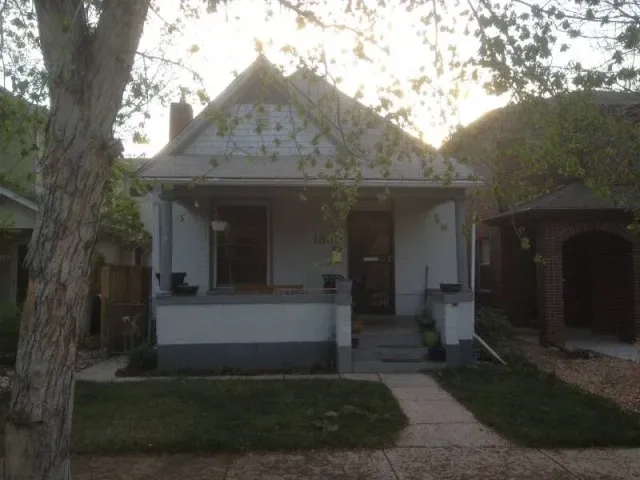
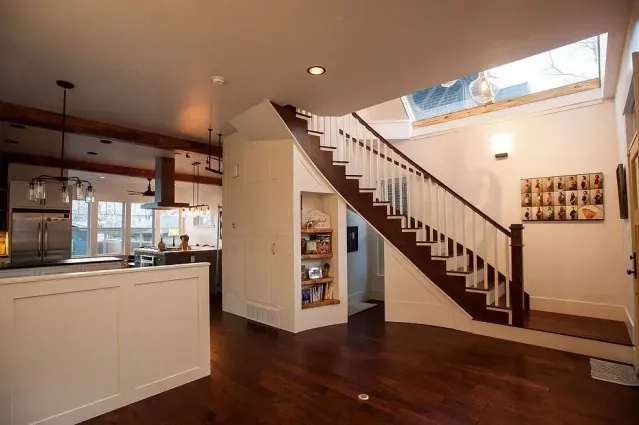
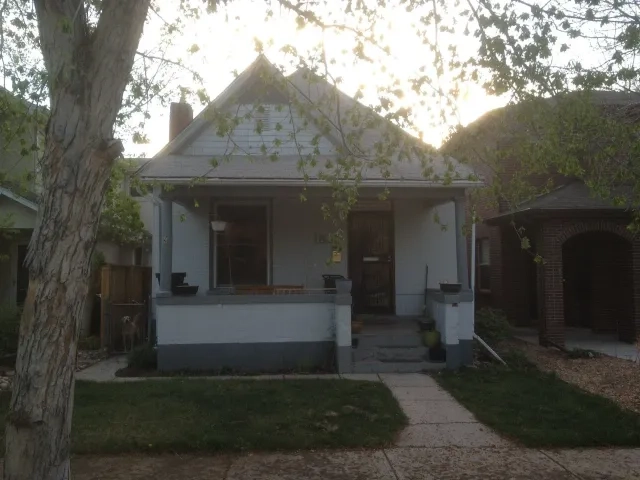
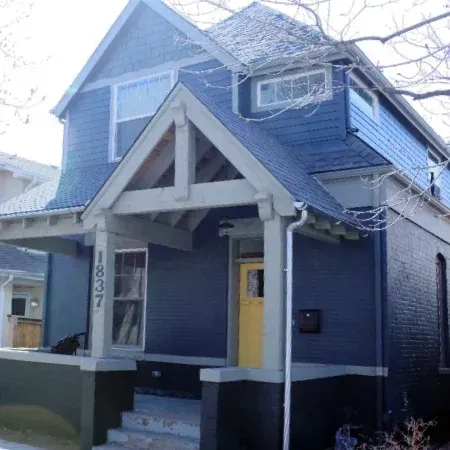
See how we deliver energy-efficient, comfortable homes across Durango, Pagosa Springs, and the San Juan region.
Continue Your Research
Explore more of our building guides for Colorado mountain construction.
Sustainable Building Materials for Mountain Climates
How to choose materials that perform in high-altitude, high-snow environments while reducing environmental impact.
Mountain Home Snow Load Engineering
Structural considerations for designing roofs and foundations that handle Colorado's heavy snow loads safely.
What Our Clients Say
Homeowners across La Plata and Archuleta Counties trust Positive Design Build for high-performance construction.
"Louis Garday, Sr Pagosa Springs, CO 81147 Re: Positive Design - Mark Positiviata December 23, 2025 What I immediately learned when we first started renovating my 4,000 sf log home was that above and beyond everything else, MARK IS A CRAFTSMAN AND PROFESSIONAL in the truest meaning of those words. His work for the planned 10 months was all completed in several diverse areas, on time, on budget, adding a professional flair whenever possible, such that I can easily claim that his skill and craftsman like work on every aspect of the engagement, including concrete and tile work, fine detailed carpentry, building a new 30’ by 20’ TREX deck, electrical work, safety grab bars and plumbing, repairs of metal roof, painting and drywall, landscaping, and a complete home Code evaluation and corrective action. His professional work easily yielded an increase of my home's value at double what I spent on the project. That ROI clearly will show up if/when I sell the house in 2026 or beyond. In a highly confident and in an unqualified manner I strongly recommend Positive Design and Mark to anyone needing all manner of home construction from a true professional and frankly a nice guy. Louis J Garday Sr. More Background information: Sometimes you get lucky. I was introduced to Mark at a dinner in late 2024 and the conversation turned to the details of the multi-faceted work I needed need to renovate and upgrade my 4,000 sf home on ten acres preparatory to selling it in the Spring of 2026 (my best estimate at the time for the optimum timing to sell based on the political/economic chaos brought on by Fed, the then current administration and pending tax law changes during the four years ending in January 2025). I have a lifetime and some 50 years' experience in the construction and real property development businesses, know the trades and have built or developed multiple commercial properties and was impressed with his knowledge during our dinner. The following Monday I received a call from Mark asking if he could walk my property with me and organize my thoughts on what I characterized as extensive work. What followed was a long and detailed survey he compiled of what was needed to remodel and reposition a 30-year-old valuable and custom log home and natural 10-acre landscape of some 200 Ponderosa Pine Trees, surrounded by the San Juan National Forest. Mark made extensive notes and revisited me a few days later, with a detailed proposal, cost estimates, a few new ideas to maximize what I had in place, a time and materials schedule, work timing and scheduling (what us old time real estate guys call a PERT Chart). This being a new relationship and having just met Mark, I agreed to bite off the first phase immediately and Mark began the (bring it up to Code phase) the following Monday in December 2024. Work began immediately and he moved his equipment into my carport and began working. I need not have worried about Mark and the process. He did a great job from Day through the completion. Louis J Garday Sr. Pagosa Springs, CO 81147"
Louis
2025-12-23
"Mark remolded our home when we bought it to perfection!!! He built a corner fireplace; a new kitchen with built in cabinet with glass doors and lights for displays. We have the most amazing master bath as he built a round shower stall, walkin with 5 shower heads, a seat and all done in glass bricks. The window is all glass bricks to let the light in with an open small window at the top to let steam out and fresh air in if wanted. A beautiful tile inlaid floor rhat is heated as wanted that he designed. Many people have come to look at it and he built several more!! He comes to fix anything or make something better when ever he is needed. He builds remarkable original things which he designs to fit the space and to last for ever! He is an artist and a very talented guy!!! I would not have anyone else do the kind of work Mark does!! Leslie Hawkinson"
Leslie
2025-12-12
"Mark of Positive Design Build did a total remodel on a rental property I own. The property was rented for over 13 yrs to the former tenant and it was sorely in need of repairs & overall updating. He did a fabulous job & it looked like a new home!! All new kitchen, new wiring, a lot of new plumbing, new bathroom tub surround, new vanity & lighting , all new paint, floors refinished & new door locks & some new doors for closets & exterior doors. I was very pleased with his hard work & the finished project."
Kelly
2025-12-16
"Mark did a great job!!! He brought creativity and imagination to a job , where I did not see the possibilities. His experience added great skill and forethought in to designing my mudroom and bathroom. I highly recommend Mark Posiviata for whatever you need to do...."
Bill
2025-12-28
Passive House FAQs
Common questions about passive house construction in Colorado's mountain communities.
What is a passive house?
A passive house is a rigorous building standard developed by the Passive House Institute US (PHIUS) that focuses on five core principles: continuous insulation, airtight construction, high-performance windows, thermal bridge-free detailing, and balanced heat and moisture recovery ventilation. Unlike conventional construction, every element works together to reduce energy consumption by up to 90%. We've built to these standards in Durango and Pagosa Springs, where the mountain climate makes these principles especially impactful.
Is a passive house worth the extra cost in Colorado?
Absolutely — and in Southwest Colorado, the payback is faster than in milder climates. Our mountain winters push heating demands well beyond what Front Range homes experience. A passive house in Durango or Pagosa Springs can cut heating costs by 75-90%, and with La Plata County utility rates climbing steadily, those savings compound year over year. Factor in the comfort upgrade — no drafts, even temperatures room to room — and most of our clients say the investment was one of the best decisions they made.
How much more does it cost to build a passive house?
In our experience building in La Plata and Archuleta Counties, the premium runs 5-15% above standard custom construction, depending on design complexity and site conditions. A home that might cost $350 per square foot with conventional methods could run $370-$400 as a passive house. However, you'll typically downsize your mechanical systems significantly — some of our projects have eliminated traditional furnaces entirely — which offsets a portion of that premium upfront.
Can a passive house have a fireplace?
Yes, but it needs to be the right kind. A passive house requires a direct-vent, sealed-combustion fireplace to maintain the airtight envelope. Traditional open fireplaces or standard wood stoves would compromise the carefully engineered air barrier. We've installed sealed-combustion gas and propane units in several of our Durango-area passive house projects, giving homeowners the ambiance they want without sacrificing performance.
Does a passive house need air conditioning in Durango?
In most cases, no. Durango and Pagosa Springs enjoy cool mountain nights even in summer, and a well-designed passive house leverages that with strategic night-cooling ventilation. The heavy insulation that keeps heat in during winter also keeps heat out during summer. We design window placements and overhangs to minimize solar gain in July and August. Out of the passive house projects we've completed in Southwest Colorado, the majority have no dedicated cooling system.
How long does it take for a passive house to pay for itself?
Based on current energy costs in the San Juan region, most passive houses pay back their additional construction cost in 8-15 years through energy savings alone. That calculation doesn't account for the increased resale value of certified high-performance homes, which studies show command a 5-10% premium in markets like La Plata County. If you plan to stay in your home long-term — as most of our clients in Durango and Pagosa Springs do — the financial case is compelling.
What is the difference between Passive House and Energy Star?
Energy Star is essentially a checklist of efficient components — install this furnace, use these windows, add this much insulation. Passive House is a holistic, performance-based standard where the entire building must hit specific targets for energy use, airtightness, and comfort. A home can check every Energy Star box and still leak air, have thermal bridges, and use three times more energy than a passive house. In Colorado's mountain climate, that performance gap translates to real dollars and real comfort differences.
Are passive houses airtight?
Yes — airtightness is one of the defining requirements. A certified passive house must achieve a blower door test result of 0.6 air changes per hour at 50 pascals (ACH50) or lower. For comparison, a typical new Colorado home tests at 3-5 ACH50, and older homes can be 8-12. But airtight doesn't mean stuffy — passive houses use a balanced heat recovery ventilation (HRV) system that continuously supplies filtered fresh air while recovering heat from exhaust air. During wildfire season in Southwest Colorado, that filtered ventilation is a major health benefit.
Still have questions?
We're here to help you find the answers.
Ready to Build a High-Performance Home in Colorado?
Whether you're targeting full Passive House certification or simply want the best-performing home possible, we'll help you make smart decisions for your budget and your site.